 Liquid error (sections/image-banner line 171): invalid url input
What we'll focus on today is unboxing this machine, showcasing the work size of the bed and how to best utilize it in your shop.
We’ll be featuring a series of videos on the OneLaser XRF, so make sure to like and subscribe to never miss an update.
Throughout the year, we’ll demonstrate how to effectively dial in your hat patches. Our specialty is high-end custom leatherette sheets, available for purchase on our website, https://laserhyde.com/. We’ll show you how to use our material to leverage the beautiful qualities of the RF tube in this laser.
If you’ve been considering this laser, you’ll learn valuable information about how to tune and prepare it for creating outstanding hat patches. Even if you already own one, the information will benefit you by helping you achieve optimal settings for your leatherette or hat patch materials. This way, you can produce better products for your clients, ultimately fostering client retention through the quality they receive.
1. Learning the OneLaser XRF
There is always some kind of learning curve with any laser machine, and especially with this one.
I believe this company has been operating for just over a year now, and we first encountered the XRF last year at the APA Expo while seeking more insight into this machine.
Now remember, new company, new machine—they are going to have some issues with this machine as they find them. So, this company can improve these machines over time, and they are definitely doing that.
They will have their Generation 2 of the XRF out soon. The current model is Gen 1, but there is an updated Gen 1. So the current model is what we have here, so the firmware is updated on this machine. The update has ironed out any tiny little things that maybe they had to work out.

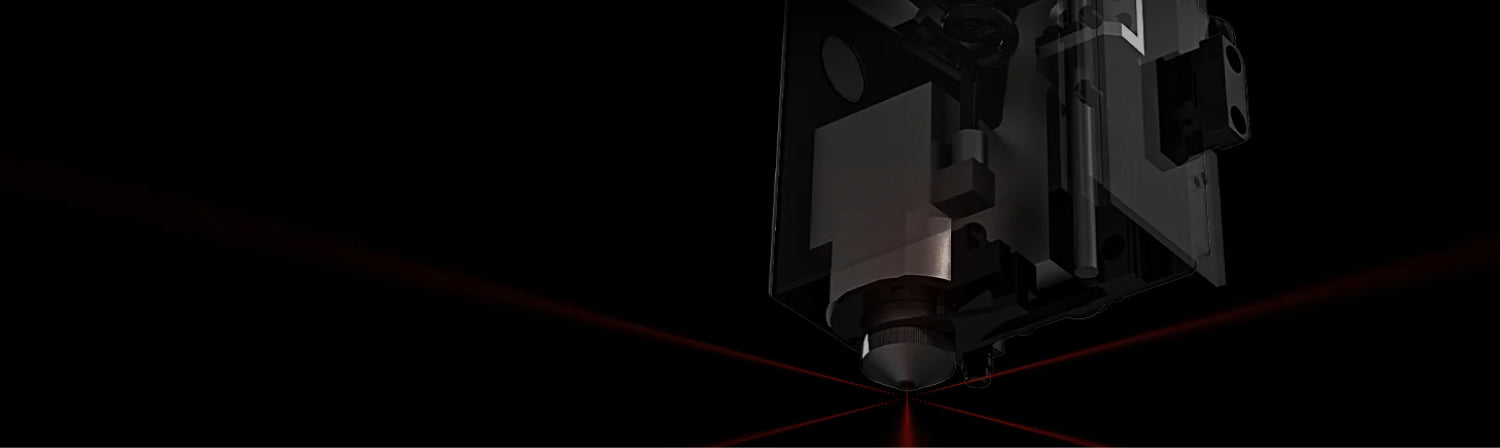
One of the things you're going to learn is this lens system on this machine. It's a bit different. So here we have a magnetic-type lens, and it has an upper and lower system on it. You’ll learn little things like that on this machine. You will learn how to keep the machine running, set up the air assist, and eventually configure the camera systems.
So there are a lot of things we’re going to be doing with this machine throughout the year.
2. Why RF Tube Lasers Matter for Hat Patches
For those of you interested in the hat-patch game, here's my key recommendation.
When you explore the lasers in our shop at Laser Hide, you'll notice the machines we specifically use for RF tube technology. The level of detail and precision these machines provide is exceptional.

If you're curious, we have a video comparison where we visited OneLaser, a local business in Lake Forest, California. We tested the new Cobra 10, a glass tube CO₂ system, alongside the XRF, fine-tuning both for custom hat patches.
To see the precision and detail these two machines can achieve, be sure to check out:
3. Unboxing the Accessories
Here we go. Now we have the tools. You have a USB printer cable, an Ethernet cable and some very nice tools here.
You have your USB cable and Q-tips to clean, those are the good ones. You also get extra fuses, a gauge, nice polished edges on all of that, and lens cleaner.
Basically they give you a small toolbox in a bag with all the things you need for the machine.
You also get a key and a USB key, which probably contain all the data and information you need, tutorials, videos, PDF documents, etc.
You also have your scanning offset card to plug into LightBurn when you are ready to set up this machine. This is a crucial data point, as the machine needs it in order to engrave correctly.
Basically, these machines are calibrated at the factory, and they provide you this card to let you know what you need to put into LightBurn for it to work properly.
4. Opening the Machine
Now, let’s dive in. OK. We've got our cord and more air cables, and now let's get into the machine.
Good. Everything is well protected with foam in there.
We pop it, lift it, and we're ready to go. But it does have a honeycomb bed, which is very nice.
The honeycomb bed just pulls right out. Now if you are going to do any kind of tumblers, then you need to get this on the riser bed so that the bed can drop and make room for tumblers.
The bed itself has these nice little pins in the front that fit into matching holes.
I like that a lot. It really locks the honeycomb bed in where it should be.
You can see there is no plaything in that bed. Nothing front to back, nothing side to side.
Isn't that what you want? You don't want the bed to move.

5. Work Area Dimensions
Your workable space on this bed is 11.8 inches by 23.6 inches.
Let me grab a piece of leatherette and place it on the bed.
The material itself fits perfectly on the bed.
Actually, I stand corrected. The bed itself is 12 inches and should be 24 inches. Let me measure that.
So, here we've got a ruler.
From edge to edge of the honeycomb, we're at about 23.90 inches.
For a 24-inch sheet of leatherette, you're going to be hanging over slightly on one side.
For those of you using 24-inch sheets of leatherette, you have to ask yourself whether you want to cut it down in order to use magnet bars.

6. Using Magnet Bars with the XRF
Here we've got some magnet bars. We sell our own edge-flat bars.
You can place one here and one over there.
This is great for the edges, but they are right at the edge of the bed. If you've got any curling, you'll need to place something there as well.
Will it work?
The bar would be hanging right off the top, but it actually still works. The bar bonds to this quite well.
So, you still can use the bar right along the edge and have no problem.
If you're running a 24-inch sheet, you can get it all the way across. You'll be hanging about 1/8 inch over, but you can put the bar right there, and you're all set.

That's kind of an okay scenario.
Personally, I like my stuff on the bed.
Our sheets come in 12 x 20 sizes, so you've got room for the bars and don't need them hanging over the side.
Our sheets are priced accordingly, so you get them a little cheaper because they are 12 x 20.
Then you're good to go.
You can either use regular individual magnets along the edge or use more magnet bars.
Sometimes on our sheets we can get one here and then use our 4-inch bars right along the edge.
It's cool stuff. Plenty of room to work, and being able to work within the space is key.
It says 11.8 inches, so you're going to have basically 1/8 inch on each side where the laser can work, and then you've got up to 23.6 inches on the length.
Just some insight for those of you who are going to be using magnet bars.
Keep in mind that the OneLaser machine itself is not metal, so these bars will not stick directly to it. You'll definitely need something for your bars to stick to.
7. Additional Features: Wi-Fi and Camera
Underneath this is your slide-out section.
I'm assuming this is some type of Wi-Fi system. I think that's what it is.
So, you get Wi-Fi with this machine, which is pretty cool.
Also, keep in mind they give you a camera on this laser. You've got a camera system that you're able to use.
We'll eventually dial that in and learn how to use it. I've never used the camera system before, so it'll be interesting to see how it works.
So, here is the OneLaser. You now see what it looks like and the area you have to work with.

Closing Thoughts
First, we've got the unboxing. Our next article will be Ethernet connection setup, and then, of course, air assist setup.
All of these articles are designed to help you get this machine connected, properly optimized, and ready to create custom patches for your business.