 Liquid error (sections/image-banner line 171): invalid url input
There is no single best laser engraver for schools. The right machine depends on your classroom, your students, and how you will actually operate it. This guide walks through real education scenarios, from elementary makerspaces to college fabrication labs, and matches each one to a machine setup that fits.
1. Every Classroom Is Different. Your Laser Shouldn't Be a Guess.
I have talked with a lot of teachers about laser engravers over the past few years. The conversation almost always starts the same way. Someone saw a laser cutter at a conference or a colleague's classroom, and now they want one too.
That instinct is a good one. A laser engraver for classroom use genuinely changes what students can build. But the machine that worked beautifully in a high school CTE lab is often the wrong fit for a fifth-grade makerspace down the hall.

2. Why Schools Keep Adding Laser Cutters & Engravers
The appeal is not just novelty. There is a real body of research behind hands-on, project-based learning, and it keeps pointing in the same direction.
A multi-year study across primary schools in Barcelona looked at what happens when young students build real prototypes as part of their coursework, rather than only reading about STEM concepts. Students who went through maker-based project work showed real gains in confidence and motivation, and the effect was especially strong for girls, a group that often reports lower STEM self-efficacy early on.
A broader analysis published in Frontiers in Psychology reviewed project-based learning outcomes across many classrooms and found consistent improvements in academic achievement, motivation, and higher-order thinking skills. Separate research on maker education in K-12 settings found that when students work on real-world problems instead of abstract ones, their creativity and critical thinking scores improve more than in traditional instruction.
None of this is about the laser itself. It is about giving students something physical to design, test, and hold. A laser cutter for school use just happens to be one of the most efficient ways to do that, because it turns a digital design into a finished object in minutes, not weeks.

3. Before You Choose a Machine: What Every School Should Verify
Picking a model is the fun part. But a few groundwork questions matter more than any spec sheet, and they are easy to skip in the excitement of a new purchase.
3.1 What's Actually Inside the Enclosure
Here is something worth understanding before you buy any educational lasers, not just from OneLaser but from any manufacturer. An enclosed classroom laser is typically built around a Class 2 housing. That means the enclosure and its safety interlocks are what keep the beam contained during normal use.

But the laser source doing the actual cutting inside that housing is a much higher-powered Class 4 laser. The enclosure is doing real work. It is not just a plastic box.
This distinction matters because it changes how you think about safety. The machine is not "safe" in some inherent, hands-off sense. It is safe when the interlocks are functioning, the lid stays closed during operation, and the people running it understand why that matters. That is true of every enclosed CO₂ laser on the market, and it is worth knowing rather than assuming.
3.2 Questions Worth Asking Before You Buy
A few minutes of due diligence up front saves a lot of friction later. Before purchasing, it is worth confirming that the lid interlock actually stops the laser when opened, that the fume extraction is rated for indoor classroom use, and that the manufacturer can provide documentation if your business office or insurance carrier asks for it.
It also helps to ask what training resources come with the machine, since a laser engraving machine for education gets used by many different people over its lifetime, not just one owner.

3.3 Decide Who Operates the Machine First
This is the step most schools skip, and it changes almost everything else about the purchase.
Some schools run what I'd call a staff-operated model. Students design their project in software, and a trained teacher or aide runs the actual job. This works well for younger students or large class sizes, because it keeps direct machine access limited to one trained adult.
Other schools run a supervised direct-operation model, where older or more advanced students operate the machine themselves under close, in-person supervision. This tends to fit smaller class sizes and more mature students, like an upper-level CTE elective.
Neither model is more "correct." But deciding this before you shop changes how many machines you need and which features actually matter to you.
4. Matching the Machine to the Classroom
This is the part most buying guides skip. Here is how the decision tends to play out across the classrooms we hear from most often.
4.1 Elementary and Middle School STEM Makerspaces
If you are running a rotating STEM or makerspace program for younger students, the priorities are almost always the same. You need something compact enough for a shared cart, quiet enough for a regular classroom, and simple enough that a teacher without a technical background can run it between periods.
This is where the OneLaser X Series, specifically the XRF model, tends to fit well. Its desktop footprint works on a shared cart or side table. The lid stays locked during operation, so the laser simply will not run with the cover open. The RF metal tube inside is close to maintenance-free, which matters a lot when the person responsible for the machine is a classroom teacher, not a lab technician.
For laser stem projects at this age, think simple geometry cutouts, name tags, and basic keychains. The goal at this stage is not precision engineering. It is giving students their first experience turning a screen design into a real object.

4.2 High School STEM and CTE Labs
A dedicated high school classroom looks different. Students are usually designing their own projects instead of using templates, and a single teacher may be supervising several workstations at once during a single period.
Here, the choice inside the X Series usually comes down to material needs. The XRF's RF metal tube produces a finer laser dot, which is useful for detailed engraving work like circuit board labels or fine text. The XT, with its CO₂ glass tube, cuts thicker material at a lower price point, which matters if your program is cutting a lot of plywood or acrylic sheet for engineering builds.
Either way, the preloaded material settings are worth mentioning here specifically. When a class period is 45 minutes long, nobody has time for trial-and-error power settings. Students who understand the design intent but are still learning the software benefit enormously from a machine that gets the settings close to right on the first try.
This is also where stem laser engraving projects start to look like real engineering work: robotics enclosures, mechanical housings, and acrylic prototypes that students test and redesign.
4.3 Shared Multi-Period Labs and Growing CTE Programs
Some schools run a single lab that serves multiple class periods back-to-back or a CTE program that has outgrown a single desktop machine. If your classroom laser cutter is getting used six or seven periods a day, the calculation changes.
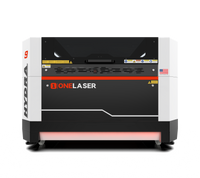
This is where the OneLaser Hydra Series tends to make more sense than the X Series. The larger working area handles full sheet materials, which matters for a classroom laser cutter running larger student projects rather than small individual pieces. The sealed tube design is built for the kind of extended daily use a shared lab actually sees, rather than occasional home-studio use.

If you are trying to figure out what counts as the best laser cutter for classroom use in this kind of high-throughput setting, the honest answer is that "best" usually means "built for volume," not just "most powerful."
4.4 University and College Design and Fabrication Labs
College and university labs are a different animal entirely. Supervision expectations are more mature, students often come from multiple departments, and the machine needs to hold up to a full academic term of repeated, intensive use.
The Hydra Series scales well here too, with different wattage options (Hydra 7, 9, 13, and 16) depending on how much throughput your program actually needs. A shared industrial design lab running dozens of student projects per week has very different demands than a smaller architecture studio running occasional models.
Speaking of architecture: a laser cutter for architecture students is one of the most common university use cases we hear about. Site models, structural prototypes, and scale building components all benefit from clean, repeatable cuts on cardboard, chipboard, and acrylic, which is exactly the kind of work a properly sized Hydra unit handles well.

4.5 Business, Entrepreneurship, and Student Store Programs
Not every education use case is about engineering. Some of the most engaged programs we've seen are entrepreneurship electives where students design, produce, and actually sell a physical product, often to fund a class trip or a student organization.
For this specific use case, the OneLaser VertiGo is worth a look, though it works best as an addition to a primary cutting machine rather than a school's first purchase. Its built-in, factory-aligned rotary removes the setup complexity that would otherwise slow down a rotating group of student operators. There is no water chiller to manage, which matters in a classroom without lab infrastructure.

Custom tumblers for a school fundraiser, personalized items for a graduation event, or small-batch products for a student store are all realistic projects here. It is a genuinely different kind of laser-cutting project for students than engraving a flat sheet of acrylic, and it teaches a different skill: turning a design into something people will actually buy.
4.6 Art and Design Programs
Art and design classrooms usually prioritize something different again: fine detail and material variety over raw throughput.
The XRF's smaller laser dot size is well suited to detailed work like jewelry-scale pieces and fine typography. Combined with broad material compatibility across wood, acrylic, leather, and paper, it gives an art program real creative range without needing a second machine.
The XRF is also a strong fit for programs exploring a 3D wood laser engraver for students as a layered art medium, building up depth and texture through repeated passes rather than a single flat cut.

5. How Many Machines Does Your Program Actually Need?
This question almost always comes back to the operating model decision from earlier in this guide.
A single classroom running a staff-operated model can often get by with one machine, even for a full school day of rotating classes, because the bottleneck is the trained operator's time, not the number of stations. A shared lab running direct student operation across multiple periods usually needs to scale with class count and rotation schedule, not simply with total student enrollment.
If you are still deciding between operating models, it is worth revisiting that decision before finalizing how many units to buy.
6. What a Classroom Laser Actually Costs Over Time
The sticker price on any educational laser cutter is only the starting point, and this is where a lot of first-time buyers get surprised a year in.
Budget for filter replacement, lens cleaning supplies, and ongoing material stock, none of which show up on the initial invoice. Sealed RF tube designs, like the ones in the X Series and VertiGo, tend to reduce mid-life maintenance costs compared to glass tube alternatives, since there is no tube degradation to manage over time.
A machine's warranty length is a reasonable proxy for how the manufacturer expects it to hold up, so it is worth checking that figure directly rather than assuming.
7. Paying for a Classroom Laser Cutter
How a school actually pays for equipment varies more than most buying guides admit, and it is worth being direct about which path fits which situation.
For most public schools, a purchase order and invoice through the manufacturer's sales team is the standard route, and it is worth contacting OneLaser directly to set this up rather than going through a consumer checkout flow.
CTE and STEM grant programs are a path many schools research as well, though eligibility and application details vary enough by district and state that it is worth confirming directly with your own grant administrator rather than relying on general guidance.
PTA groups or booster clubs sometimes purchase equipment directly, which is a slightly different path than a district-level PO.
Consumer and small-business financing options are also available, but they are built for an individual or business entity making the purchase, such as a booster club treasurer purchasing under their own name, rather than a school district's procurement process. If you are buying on behalf of a district, it is worth talking to OneLaser's sales team directly about setting up the right kind of order for your institution.
8. Setting Up a Safe Laser Station
A little planning here goes a long way, and most of it is common sense once it is written down.
Ventilation matters more than people expect. Even a machine with built-in filtration benefits from a reasonably ventilated room, especially with regular daily use. The supervision ratio should match whichever operating model you chose earlier: tighter for direct student operation and more flexible for a staff-operated setup. Before first use, a short safety walkthrough covering the emergency stop, the interlock, and what materials are and are not safe to cut is worth the twenty minutes it takes.
It also helps to put this in writing. A short internal policy naming who is authorized to operate the machine, requiring a signed acknowledgment from anyone using it, and keeping basic training records gives a program something concrete to point to if a district administrator or insurance carrier ever asks.

9. FAQs about Laser Engraver for Schools and Education
Which OneLaser machine is right for a single classroom versus a shared lab?
A single classroom running smaller projects usually fits perfectly with the X Series. A shared lab running multiple periods or larger projects tends to outgrow that footprint and fits better with the Hydra Series.
Should students operate the machine directly, or should staff run it?
Both models work, and the right choice depends on class size, student age, and supervision capacity. Younger or larger classes tend to do better with a staff-operated model. Smaller, more advanced classes can often support direct student operation under close supervision.
What's the difference between the enclosure's safety class and the laser inside it?
The enclosure is typically built to Class 2 standards, meaning the housing and interlocks contain the beam during normal use. The laser source inside is a more powerful Class 4 laser. The enclosure is what makes the setup classroom-appropriate, not the underlying laser, which is inherently low-power.
How does a school typically pay for a laser cutter?
Most public schools use a purchase order through the manufacturer's sales team. CTE and STEM grants are another path some schools use, and PTA or booster club purchases are common for a more individual buying path. Consumer financing options are also available, but they are more appropriate for individual or business purchasers than for district-level orders.
What ongoing costs should a school budget for beyond the machine price?
Filter replacement, lens cleaning supplies, and material stock are the recurring costs most first-time buyers underestimate. Sealed RF tube machines tend to need less mid-life maintenance than glass tube alternatives.
Can the VertiGo replace a school's primary cutting machine?
Not really. It is purpose-built for cylindrical items like tumblers and bottles, which makes it a strong addition for entrepreneurship or fundraising programs, but most schools will still want a flatbed machine like the X Series or Hydra Series as their primary cutter.
The Bottom Line
Choosing a laser engraver for schools works best when you start with your actual classroom, not a spec sheet. Figure out who will operate the machine, match the model to your class size and project type, and budget honestly for what it costs beyond the initial purchase.
If you are still weighing options, OneLaser's team can walk through your specific classroom setup and help you figure out the right machine and purchasing path for your school.