 Liquid error (sections/image-banner line 171): invalid url input
Stepping into the world of laser technology can feel like learning a new language. You might find yourself asking, "What does this button do?" or "How does the beam actually get to the material?" Understanding the VertiGo laser engraver parts is the first step toward moving from a curious beginner to a confident maker.
Whether you are setting up your machine for the first time or training a new team member, knowing your equipment inside and out ensures safety, precision, and a much longer machine lifespan.
This comprehensive guide breaks down every critical component of the VertiGo series. We will explore the internal motion systems that drive your designs, the external controls you interact with daily, and the rear interfaces that keep the machine powered and connected. By the end of this overview, you will have a professional grasp of laser engraving machine parts and how they harmonize to create high-quality engravings.
Key Takeaway
- Safety Priority: Components like the Emergency-stop and Door Protection Sensors are your primary defense against accidents.
- Optical Precision: The mirrors and laser head require regular inspection to maintain beam quality.
- Motion Integrity: The drag chain and Z-axis components facilitate smooth movement and protect vital internal wiring.
- Connectivity Options: The VertiGo supports both hardwired (Ethernet/USB) and wireless (WiFi) data transmission for flexible workflows.
1. What guides the laser beam and manages motion?
The internal motion system consists of high-precision mirrors, a specialized laser head, and mechanical tracks that translate digital designs into physical movements.

To understand laser engraving components, you must first understand the optical path. In VertiGo CO2 system, the laser beam is not "carried" by a wire; it is reflected across a series of mirrors. If these mirrors are out of alignment, your engraving will lose focus or disappear entirely.
Internal & Motion System Details
(1) Mirrors: These are polished reflective surfaces that bounce the laser beam from the source (the laser tube) through the gantry and finally down into the laser head.

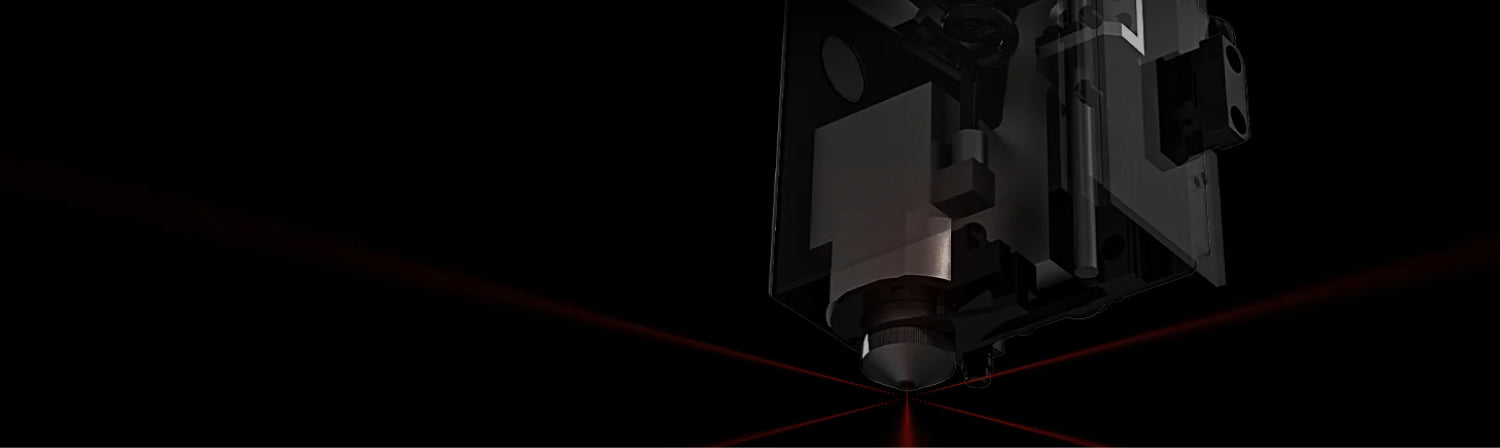
(2) Laser Head: This is the "business end" of the machine. Both the invisible laser beam and a visible red dot pointer are emitted here. The red dot is essential for "framing" your project so you know exactly where the engraving will land.

(3) Drag Chain: As the machine moves at high speeds, internal cables are subjected to constant stress. The drag chain acts as a flexible protective spine, guiding and shielding these cables from tangling or wearing out.

(4) Door Protection Sensors: Installed on both sides of the lid, these safety devices trigger an immediate stop if the cover is opened. This prevents accidental exposure to the laser beam.

(5) Rotary Fixture: This component is a game-changer for small businesses. It allows you to clamp cylindrical objects—like tumblers, pens, or rolling pins—enabling 360-degree engraving.

(6) Z-axis: Unlike the X and Y axes that move the head across the bed, the Z-axis handles the vertical or lateral depth movement, which is critical for focusing the beam on materials of different thicknesses.

(7) Level: A simple but vital tool located on the chassis. It provides a visual reference to ensure the machine is perfectly balanced on the floor, which prevents mechanical binding.

2. How do you interact with the machine’s exterior?
The external components of the VertiGo provide the user interface and physical housing necessary for safe operation and machine mobility.
The exterior of the laser engraving machine components is designed for ergonomics and real-time feedback. While the software does the heavy lifting, the physical controls allow you to make "on-the-fly" adjustments.

External & Control Components
(8) Flaps (External Cover): The heavy-duty cover serves as a protective barrier. The VertiGo is programmed so that no data will be processed if the flaps are open. If you need to check a workpiece mid-job, you must press 'Pause' before lifting the cover.

(9) Indicator Light: This is your machine's "status bar." A red light indicates the machine is currently active and running a job. Never put your hands near the motion system when this light is illuminated.

(10) Control Panel: This is the brain of the user interface. It allows for manual control of the F, H, and R axes. It also displays the total machine runtime and provides access to advanced functional settings without needing to return to your computer.

(11) Casters: These industrial-grade wheels at the bottom of the machine allow for easy repositioning in your workshop. Once in place, they can be adjusted to level the machine and then locked to ensure stability during high-speed engraving.

Why Leveling Matters
A common mistake for new users is ignoring the casters. If the machine is not level, the gantry (the rail the laser head moves on) can become slightly twisted. This causes "ghosting" in your engravings or increased wear on the stepper motors. Always use the built-in Level indicator when moving the machine to a new spot.
3. What powers and connects the VertiGo?
The rear interface serves as the machine's power hub and data center, housing the connectivity ports, cooling systems, and primary safety switches.
The back of the machine is often overlooked, but it contains the component parts for engraver and laser systems that ensure the machine doesn't overheat and stays connected to your design software.

Rear Functions & Interfaces
(12) Cooling Fan: Laser components generate significant heat. These fans operate constantly to circulate air through the electronics cabinet, preventing the motherboard and drivers from overheating.

(13) PC and Ethernet Connection Ports: These are the primary data entries. You can connect via a standard USB cable for direct PC control or use an Ethernet cable for a more stable, long-distance connection within a local network.

(14) Main Switch: This is the primary power toggle. It should be the first thing you turn on and the last thing you turn off each day.

(15) WiFi Router: In modern maker spaces, cables can be a tripping hazard. The built-in WiFi receiver allows the VertiGo to receive design files wirelessly, allowing you to send jobs from a computer across the room.

(16) Exhaust Fan: Laser engraving produces smoke and fumes (especially when cutting acrylic or wood). The exhaust fan pulls these gases out of the machine and through a pipe to an external vent or filtration system.

(17) Emergency-stop (E-Stop): This is the most critical safety part on the machine. In the event of a fire, a mechanical jam, or an unexpected error, hitting this large red button instantly cuts power to the laser tube and the motion motors.

4. How do these parts work together during a job?
To truly understand laser engraving machine parts, it helps to visualize a single project from start to finish.
- Preparation: You use the Casters to position the machine and check the Level to ensure a flat working surface.
- Connectivity: You send your file via the WiFi Router or Ethernet Port.
- Setup: You place your material on the bed (or use the Rotary Fixture for a cup). You use the Control Panel to move the Laser Head into position, guided by the red dot pointer.
- Operation: Once you close the Flaps, the Door Protection Sensors clear the machine for work. You hit start, and the Mirrors begin reflecting the beam while the Z-axis and Drag Chain coordinate the motion.
- Environment: The Exhaust Fan clears the smoke while the Cooling Fan keeps the electronics safe.
- Safety: If anything goes wrong, you have the Emergency-stop within arm's reach.
5. Maintenance Tips for Longevity
Understanding the parts also means knowing how to care for them. Here is a scannable maintenance guide for your VertiGo laser engraver parts.
|
Component |
Maintenance Frequency |
Action Required |
|
Mirrors & Lens |
Daily / Every 8 hours |
Clean with IPA (Isopropyl Alcohol) and a lens tissue. |
|
Exhaust Fan |
Weekly |
Check for debris buildup; clear the exhaust pipe. |
|
Drag Chain |
Monthly |
Inspect for cracks or loose cables; wipe off dust. |
|
Z-axis Rails |
Monthly |
Apply a small amount of lithium-based grease for smooth movement. |
|
Cooling Fan |
Quarterly |
Use compressed air to blow dust out of the fan blades and electronics. |
Conclusion: Mastering Your VertiGo
Operating a laser machine is a rewarding experience, but professional results are only possible when you understand the equipment. From the delicate alignment of the mirrors to the robust safety of the Emergency-stop, every part of the VertiGo plays a vital role in your success.
By identifying these VertiGo laser engraver parts and following the maintenance protocols outlined here, you reduce the risk of downtime and ensure a safe working environment for yourself and your team. Standardized operation begins with understanding every detail of your machine. At OneLaser, we are committed to providing the tools and the knowledge you need to excel in the laser engraving industry.
For further technical documentation, wiring diagrams, or troubleshooting guides, please visit the OneLaser Wiki or contact our technical support team.
FAQs
Q: Can I bypass the Door Protection Sensors for faster workflow?
A: No. Bypassing safety sensors is extremely dangerous and voids your warranty. It exposes the operator to invisible CO2 laser radiation, which can cause permanent eye damage.
Q: Why is my laser head moving but not engraving anything?
A: Check if the Indicator Light is red. If it is, but there is no beam, check your mirror alignment or ensure the Flaps are fully closed and acknowledged by the system.
Q: What is the difference between the 'Pause' button and the 'Emergency-stop'?
A: 'Pause' holds the job in place so you can resume it later. 'Emergency-stop' kills all power immediately and usually requires you to reset the software and home the machine again.
Q: Does the WiFi connection affect engraving speed?
A: No. The WiFi is only used to transfer the file to the machine's internal memory. Once the job starts, the machine runs independently of the network.
Q: How do I know if my Z-axis needs maintenance?
A: If you hear a grinding noise or notice jerky movement when moving the laser head left or right, it’s time to clean and lubricate the Z-axis rails.