 Liquid error (sections/image-banner line 171): invalid url input
Laser engraving and CNC engraving are two widely used digital fabrication technologies. While both can produce precise designs, they operate through completely different processes.
Laser engraving removes material using focused light and heat, whereas CNC engraving uses rotating cutting tools to carve material mechanically. In general, laser engraving excels at fine detail, surface marking, and high-speed production, while CNC engraving is better suited for deep carving, structural machining, and rigid materials.
Understanding these differences helps makers and manufacturers choose the most efficient technology for their applications.
1. How Laser engraving and CNC engraving Technology Work
Modern engraving technologies rely on two distinct mechanisms: photothermal ablation and mechanical cutting.
Laser processing uses concentrated light energy to rapidly heat a surface until the material melts, vaporizes, or decomposes. According to experts like Steen, Mazumder, and Ready, this process converts optical energy into thermal energy for precise, localized material removal.
In contrast, mechanical CNC engraving operates through chip formation. As outlined by the ASM Handbook and MIT OpenCourseWare, this subtractive process removes material by applying physical force with a cutting tool, creating chips through plastic deformation and shear.
Ultimately, the primary difference lies in the energy interaction: laser systems utilize thermal energy, while CNC machining relies on mechanical force.
1.1 Laser Engraving: Photothermal Material Removal
A laser engraver uses a highly focused beam of light to heat the material surface until it vaporizes, melts, or carbonizes. This process removes extremely thin layers of material without physical contact.
Because the beam diameter is very small, the energy density becomes extremely high at the focal point.
Key characteristics:
- Material removal through thermal energy
- Ultra-fine beam diameter (0.05–0.2 mm)
- Very high engraving speed
- No physical contact with the workpiece
Common laser types used for engraving:
- CO₂ lasers – wood, acrylic, leather, paper, rubber, stone
- Fiber lasers – metal marking, stainless steel, anodized aluminum
- Diode lasers – hobby-level marking on wood, leather, and paper

1.2 CNC Engraving: Mechanical Material Cutting
CNC engraving removes material using a rotating cutting tool such as a V-bit, end mill, or ball nose cutter.
The cutting tool physically contacts the material and removes chips as it moves along programmed toolpaths.
Key characteristics:
- Material removed through mechanical cutting
- Engraving depth controlled by Z-axis movement
- Requires fixtures or clamps to hold the workpiece
- Tool diameter limits minimum feature size
Common CNC engraving machines include:
- CNC routers
- CNC milling machines
- 3-axis, 4-axis, and 5-axis carving systems

2. Material Compatibility Comparison
Material compatibility is one of the most important factors when choosing between laser and CNC engraving.
2.1 Materials Suitable for Laser Engraving
Laser engraving works best with materials that respond well to thermal interaction.
Common laser-engraved materials:
- Wood, plywood, MDF
- Acrylic (clear or colored)
- Leather and synthetic leather
- Rubber for stamps
- Paperboard and cardboard
- Coated metals and anodized aluminum
- Glass and stone (surface engraving only)

Materials not suitable for laser engraving:
- PVC – releases toxic chlorine gas
- ABS – melts and produces hazardous fumes
- Some bare metals when using CO₂ lasers
2.2 Materials Suitable for CNC Engraving
CNC engraving performs best on rigid, thick, or high-hardness materials.
Typical CNC materials:
- Hardwood and solid wood
- Thick acrylic blocks
- Polycarbonate, Delrin, HDPE
- Aluminum, brass, copper
- Composite panels
- Wax for mold making
- Mild steel (with high-rigidity CNC mills)

2.3 Side-by-Side Material Comparison
|
Material |
Laser |
CNC |
|
Wood |
✔ Excellent |
✔ Excellent |
|
Acrylic (surface) |
✔ Frosted effect |
✔ Machined finish |
|
Acrylic (deep 3D) |
✘ |
✔ Excellent |
|
Metal |
✔ (fiber laser) |
✔ |
|
PVC |
✘ Hazardous |
✔ |
|
Stone |
✔ Surface engraving |
✘ |
|
Leather |
✔ |
✘ |
3. Design Complexity & Detail Capabilities
3.1 Laser: Ultra-Fine Detail
Laser engraving excels at:
- Thin line artwork
- Small text (<1 mm)
- QR codes and barcodes
- Photo engraving (grayscale raster)
- Complex curves and organic shapes
Because the beam has no mechanical inertia, it can change direction almost instantly.
3.2 CNC: True 3D Relief & Sculpting
CNC engraving enables:
- Deep carving (5–50 mm or more)
- 2.5D and full 3D relief
- Pockets and bevels
- Multi-layer structural parts
Lasers cannot remove large volumes of material efficiently, which limits their ability to produce deep 3D shapes.
4. Engraving Depth & Surface Finish
4.1 Laser Depth Characteristics
Typical engraving depth: 0.1–3 mm
Common applications:
- Branding logos
- Surface textures
- Decorative engraving
Limitations:
- Deep passes may cause excessive charring on wood
- Acrylic typically forms a white frosted surface
4.2 CNC Depth Characteristics
CNC engraving depth can reach: 10–100 mm depending on tooling
Advantages:
- Smooth sidewalls with correct feed and speed
- Suitable for deep pockets and relief carving
Limitations:
- Tool marks may require sanding
- Minimum detail size depends on tool diameter

5. Production Speed & Workflow Efficiency
5.1 Laser Speed
Laser engraving is significantly faster for:
- Surface engraving
- Raster images
- Large-area decoration
- Batch marking
Since the beam never touches the material, machines can accelerate very quickly.
For example, modern systems such as OneLaser machines can reach high scanning speeds suitable for production environments, especially when engraving wood, acrylic, and coated metals.
5.2 CNC Speed
CNC engraving is generally slower because:
- The tool must physically cut through material
- Multiple passes are required for deeper cuts
- Tool changes may be necessary
- Feed rate must be carefully controlled
However, CNC is much faster when removing large volumes of material, such as carving 10–20 mm deep relief.
5.3 Which System Is Better for Mass Production?
Laser systems are ideal for:
✔ High-volume surface engraving
✔ Rapid batch personalization
✔ Automated workflows
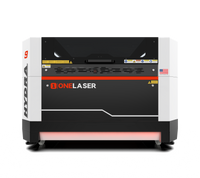
Some modern laser production machines, such as Hydra dual-laser systems, are designed specifically for continuous batch production, allowing multiple laser sources to operate simultaneously for higher throughput.
CNC systems remain the better choice for:
✔ Deep relief carving
✔ Structural components
✔ Precision mechanical parts
6. Precision, Tolerance & Repeatability
6.1 Laser Precision
Advantages:
- Extremely fine detail
- Very narrow kerf width
- Excellent repeatability
Limitation:
- Heat can cause minor thermal distortion on thin materials.
6.2 CNC Precision
Advantages:
- High dimensional accuracy
- Stable machining of rigid materials
- Suitable for mechanical components
Applications include:
- Gears
- Tooling
- Mold components
- Machine parts
7. Cost, Maintenance & Long-Term Considerations
Choosing between laser and CNC equipment also requires considering investment cost, maintenance, and long-term operation expenses.
7.1 Initial Equipment Cost
Typical cost ranges:
- Entry-level CO₂ laser engravers – relatively affordable
- Desktop CNC routers – moderate cost
- Industrial CNC milling machines – highest investment due to structural rigidity and spindle systems
Industrial systems for either technology can cost significantly more depending on size and automation level.
7.2 Operating Costs
a. Laser systems
Maintenance may include:
- CO₂ laser tube replacement (for glass tube systems)
- Periodic cleaning of mirrors and lenses
- Exhaust fans and air filtration maintenance
b. CNC systems
Maintenance typically involves:
- Frequent cutting tool replacement
- Spindle bearing maintenance
- Dust collection system servicing
- Lubrication of motion components
7.3 Cost Efficiency
Cost efficiency depends heavily on the application.
Laser engraving is typically more cost-effective for:
- Surface engraving
- Customization businesses
- Signage production
- Photo engraving
CNC engraving is more cost-efficient for:
- Deep carving
- Furniture production
- Mold making
- Structural components
8. Application Scenarios & Real Use Cases
8.1 Woodworking
Laser:
- Photo engraving
- Logos and branding
- Decorative linework
CNC:
- Furniture components
- 3D relief carving
- Joinery pockets and grooves

8.2 Gift & Customization Industry
Laser engraving is the fastest solution for personalized products, including:
- Custom gifts
- Name engraving
- Wedding items
CNC engraving is used for premium 3D carved products.

8.3 Industrial Manufacturing
Laser engraving is widely used for:
- Serial numbers
- Barcodes
- Traceability markings
CNC machining is commonly used for:
- Molds
- Mechanical prototypes
- Structural brackets

9. Decision Matrix: Which Technology Should You Choose?
|
Requirement |
Recommended |
|
Laser |
|
|
Very fine detail |
Laser |
|
Deep carving |
CNC |
|
Hard metals |
CNC |
|
Stone surface marking |
Laser |
|
High-volume surface marking |
Laser |
|
CNC |
|
|
PVC plastics |
CNC (Never laser) |
10. FAQs
Can a CNC engrave?
Yes. CNC machines can engrave by using specialized bits such as V-bits or ball-nose cutters to carve lines, text, and patterns into materials.
What is better, CNC or laser?
Neither is universally better. Laser engraving is superior for fine detail, speed, and surface marking, while CNC engraving is better for deep carving and structural machining.
Is a laser engraver the same as a CNC machine?
No. A laser engraver uses light energy, while CNC machines use rotating cutting tools to remove material.
What are the disadvantages of CNC?
Common disadvantages include:
- Slower for fine surface engraving
- Tool wear and replacement costs
- Limited minimum feature size due to tool diameter
- Requires work holding fixtures
What are the disadvantages of laser engraving?
Potential limitations include:
- Limited engraving depth
- Some materials cannot be processed
- Heat-affected zones on certain materials
- Requires ventilation for fumes
Can I laser engrave at home?
Yes. Many hobby-level diode and small CO₂ laser engravers are designed for home workshops, provided proper ventilation and safety precautions are used.
Is engraving difficult to learn?
Basic engraving can be learned relatively quickly using modern design software and machine presets. However, mastering materials, speeds, and power settings requires practice.
How long will laser engraving last?
Laser engraving is permanent because it physically alters the material surface. On metals or wood, the engraving can last for decades.
Why is CNC expensive?
High-precision CNC machines require:
- Rigid frames
- High-power spindles
- Precision motion systems
These components increase manufacturing and maintenance costs.
Key Takeaway
Laser engraving and CNC engraving differ in how they remove material—laser uses heat (non-contact) for fast, ultra-fine surface detail, while CNC uses mechanical cutting for deep, structural, and hard-material machining.
- Choose laser for precision, speed, and high-volume surface work.
- Choose CNC for depth, strength, and heavy-duty materials.